Thursday, November 14, 2013

Wednesday, November 13, 2013
So Here's My Question
Every news broadcast and many, many articles in my feeds bemoan the disaster that is Obamacare. Listening to the cacophony is fairly depressing, and over the last few days it has really got me thinking. My impression was that most of the law hadn't even kicked in yet and that for many of the parts of the law that had begun things were just swell. So if that's true, who is complaining and what are they complaining about?
Think about it. Just what is going wrong?
No denial for previous conditions: working.
Insurance company spending directed toward health care spending: working.
Preventive care included with all insurance: working.
Mental health care included with all insurance: working.
No dropping coverage because you get sick: working.
Adult children can stay on their parents' policies longer: working.
No annual or lifetime spending caps: working.
Oh, and millions of people previously ineligible for insurance now eligible: working.
Those are just the ones I know off the top of my head and I'm not a policy wonk. But I know it isn't all good...
Healthcare.gov: mostly not working.
"If you like your coverage, you can keep your coverage.": mostly not working.
So there are some things that aren't going well, but looking even a little bit closer is it really that big a deal? Off the top, we're only talking about people that had no insurance before or were in the individual market. For people who are the former things are unfortunate, but no worse off than they were before. For people who are the latter things are also unfortunate, but weren't we told that only 5% on insurance moves through the individual market? Right, so whatever is going wrong it doesn't impact somewhere in the world of 95% of the public.
However terrible things have rolled out, at most they are terrible for less than 5% of folks that already had insurance.
With that in mind let's recap the things that aren't working. The website isn't fully functional. Leaving aside that for some people healthcare.org is working, and leaving aside that there's a telephone alternate (which admittedly is also only partially up to speed), and leaving aside that you can still - just like before - go direct to the insurance company, the federal website is only in play for people that live in states that didn't set up their own exchanges.
In California, Kentucky, Oregon and the other states that didn't leave things to the federal government things are working peachy. Of the whole of the group vulnerable to this particular issue let's assume that maybe half of them live in states dependent on healthcare.gov. Put a pin in that.
Then there's the promise: "If you like your coverage, you can keep your coverage." Part of me wants to fall back on what I said about this during the campaign: there simply isn't anyone that likes their coverage. I just always assumed that anyone that liked their coverage either hadn't had to use it or was ignorant of the mechanics in some way. I thought that promise was hollow to begin with.
But let's assume there actually were people that were happy with their coverage and let's assume that the list of global improvements above is somehow not enough to make the change worth it for them. From what I've heard maybe 1/3 of these people are actually untouched by the program at this time - they're just either "sure" or terrified something bad is going to happen, but as of yet the fear or the certainty is unsupported. Another 1/3 of these folks, once they find what their new coverage will be find that they are getting more for less. And then yes, the remaining 1/3 are a little bit getting screwed for the rest of the country.
Who does that leave with a legitimate beef? From 1/3 to 1/2 of 5% Between 1.5 to 2.5% of the population and THAT is only with the caveat that they are totally unmoved by the improvement for the whole.
Why is there so much noise over 2%?
There are going to be things that need to be changed. There are going to be things that are not going to have the exact consequence when they come into play. We will need to have frank conversation about those things when they happen.
But can everyone please turn down the volume until there's really something substantive to yammer about?
Tuesday, November 12, 2013
Coulda Been Worse
Considering we were supposed to lose by more than 30 this wasn't too bad.

But, close doesn't count. A loss is a loss. In case someone is counting, this is the second week I've left enough points on the bench to have won.
Monday, November 11, 2013
Comment of the Week
Here are this week's contenders - vote by Friday morning!
Student #1 has left a new comment on your post "Is the Great Recession Over for the Arts?":
This is a really great article for relating to topic talked about in Tech Management and Olivier's Nose. At the end of the article it asked some questions we as a class asked. The first question was "Can a origination be perpetuity?" I think this question is an extremely good question because when writing mission statements most arts organizations create a statement that would would allow the organization to last forever, which does not necessarily done. There can be great arts organizations that do not last forever. I think we shouldn't focus on sad cases such as New York City Opera but, focus on the great companies that can now start from New York City Opera. The rest of the questions the article gave really seemed to be tips for organizations, many of which seemed like things which an organization should be doing to anyways like, being honest with employees, and remain true to the organizations mission. The two tips that I really thought were useful was advising the creation of a smaller board to help make decisions quick and, don't lower your budget on marketing. The smaller board particularly stood out in my mind because it seemed as if that was something to be done in emergencies and that it could be dangerous do to the fact it could leave out important chains of command. A dangerous thing to do when a business is in trouble. I think that this article was great, and I am really glad I read it to get exposed to the economical side of the arts.Student #2 has left a new comment on your post "All the News That Fits the Print: The Failure of A...":
This article sheds light on the side of the arts that we often don't get to read about: the positive one. As this article says, the vast majority of articles in the press about the arts are about the failure of companies or how the arts are in decline. Sure, some companies have financial problems or aren't doing great because of their subscriber base or some other reason, but it's important to note that there are also companies that are doing well. Symphonies, ballets, and operas are usually the sectors of the arts that get slammed for being "too elitist/expensive/out-of-touch" for the general public and the realities of a not-too-distant recession, and the press harps on this constantly. However, something this article doesn't really talk about, but is another part of this, is how some orchestras have adapted to the changing times. The Pittsburgh Orchestra recently did a compilation of Pixar hits and another of the Lord of the Rings soundtrack, and, as Sophie mentioned, they are performing The Planets with projections of space. Classical music companies are still able to attract a large audience and donors, as his examples of the symphonies in St. Louis, Houston, and Detroit show, and it would be great if the press was able to balance their reporting with this positive stories as well.Student #3 has left a new comment on your post "Why Creativity Thrives In The Dark":
Artists have used the concept of chiaroscuro for centuries, and it demonstrates how the human eye sees more details when confronted with shadows and highlights. So it would not surprise me if creativity thrives in the dark; however, I had several issues with this article. In their experiments, what kind of lights did they use? There is a difference between cool and warm lights, and I know personally that warm lights make me comfortable enough to explore ideas. I also had questions about the Toni Morrison statement (Don't get me wrong, I love her work!). "It's not being in the light, it's being there before it arrives." When I'm working in a dimly lit environment, the sun is usually going down. This gives me exposure to a dim light and shadows. But I'm not waiting for the next day's sunrise. I'm waiting for the midnight's darkness. I think the night's darkness itself encourages creativity because our minds must fill in what we cannot see. We have to create our worlds, whereas the light would give us all of the answers, and that's just boring. I wasn't really impressed with this study, actually. I found it lacking certain facts. The article said that when "the lights switch off, something in the brain switches on." Well what part of the brain? What switches on and off? I think what they've done is a good start, but I hope they would finish this experiment with scientific studies on the brain. I'm also interested to know if there is any connection between this experiment's research and depression. It is known that lack of light exposure can lead to depression for some, and it is widely known that many creative people are prone to mood disorders and depression. The Ohio State University did an experiment on mice with sleep apnea and discovered that mice who were exposed to dim light at night increased depression and anxiety. So although darkness increases creativity, is it at the cost of our sanity? Is it something we want to gamble away? This all depends on how much that individual wants to explore the unknown.Student #4 has left a new comment on your post "Can Art Teach Patience?":
I disagree with the statement, "Our increasingly online, instantaneous existence accounts for those numbers, obviously." Yes, the modern emphasis on speed, contributed to by the internet, no doubt plays a large role in why people look at paintings so quickly. However, we can't state that this is the definitive sole cause for this behavior. There are other factors that certainly play into it. For example, just as mentioned in the article, when I went to see the Mona Lisa, I only looked at it for about 15 seconds. This wasn't because I wasn't interested- it was because I was in a huge room in a claustrophobic crowd of people all looking at a painting more than 50 feet away, behind a glass wall and ropes so that the closest you could possibly get, if you managed to fight your way through the crowd, was maybe 20 feet. I liked the painting, but there were paintings just as interesting in the next room over, and it wasn't as uncomfortable an experience viewing them. I know that personally I love spending long amounts of time in museums- the only reason I would hurry through them is if I was eager to see all of the pieces in a limited amount of time. I'm sure I could spend more time looking at art- it's a problem that all of us have, and it should be addressed in the context of short attention spans caused by the internet. however, we should also examine how we could better set up museums and other spaces so as to encourage prolonged observation, as opposed to rushing through to make sure we see everything. Bemoaning the attention spans of the young isn't going to fix the problem, and not everyone has access to an art class that forces them to spend 3 hours in a museum. We have to find practical solutions to ensure that people actually look at the art, instead of rushing past and only seeing it. Perhaps ways to solve this would be by having smaller rooms with fewer paintings, instead of the overwhelming galleries that are often the display space (I always find myself distracted by the art next to the piece I am looking at). Maybe we could organize the art in a way that would encourage connections between the pieces, so people would see one and then go back to a previous one. We have to think of actual solutions.Student #5 has left a new comment on your post "Black Swans and Trojan Horses: Why That Internship...":
After reading the multiple articles posted on the Green Page regarding this issue, I feel very conflicted. I have always had the attitude that unpaid internships can both be good and bad. It really depends on the specific internship and person who is seeking the internship. I completely agree that it should not be legal for companies to have unpaid interns replace or work in a position where a paid employee would have otherwise occupied. Companies that are having unpaid interns work in real positions are playing the system. However, at the same time, I think that unpaid internships are an important part of education, and students and other young people would struggle to break into their aspired industries without them. For example, many theatre companies offer unpaid internships. In most cases, theatre companies are not able to offer wages to their interns because the money is already being spent elsewhere. If unpaid internships were altogether banned, many aspiring theatre students would have a harder time breaking into the industry. Also, one of the articles described how getting fired from an unpaid internship is not a huge deal since you are not being paid in the first place. However, I would completely disagree with this, as developing relationships and contacts in the industry is something that is invaluable when entering the work force.
Sunday, November 10, 2013
And another thing...
Sometimes it is difficult cutting down to five "Worth a Look" articles...
30 Fantastic Movie Costumes by the Legendary Edith Head
The Cut: Costume Designer Edith Head once said "If it's a Paramount film I probably designed it." She doesn't even have to pretend to be humble. Her influence continues — immortalized both as a character in Pixar's The Incredibles, and today, as a Google Doodle tribute in honor of her 116th birthday.
How Foam Latex Spawned a Horror Makeup Revolution
Tested: When Netflix debuted its original horror show Hemlock Grove this year, one of the things that got viewers and critics talking was the gruesome werewolf transformation in the first episode. It was a uniquely designed metamorphosis--and yes, it was gory--but if you ask me, it was held back by the production's reliance on computer generated graphics. The transformation looked too fake, shiny, and even rubbery. Which is ironic because the horror monsters of yesteryear looked better when they were actually made of rubber. Specifically foam latex.
Design FX: How Ender's Game Filmed Zero-G Battles That Obey the Laws of Physics
Underwire | Wired.com: A signature piece in Gavin Hood’s latest film Ender’s Game is its massive zero-gravity Battle Room — a place where the titular character played by Asa Butterfield trains for alien war. Seeing the film’s young stars float through weightless battle is a wonderful thing to behold — and something that took astronomical amounts of time and digital trickery.
A Whole New Ballgame in Arts Hiring
theatrebayarea.org: In 2003, the National Football League was facing a problem in hiring not dissimilar to the one theatres are confronting today: its leadership didn’t look like the rest of its employees. That year, 70% of players were black, but only 6% of head coaches were. In fact, in the course of the NFL’s history up to that point, only seven head coaches of color had ever been hired. Those numbers meant that the problem wasn’t a pipeline issue, i.e., that there weren’t enough qualified candidates of color to interview for those positions. The problem, rather, was a glass ceiling issue, meaning bias was preventing qualified candidates from advancing.
Dan O'Bannon and The Origins of Alien
Tested: About a decade or so back, I did a lengthy interview with screenwriter Dan O’Bannon about the film he would always be best known for: Alien. Alien first came together from several scripts O’Bannon came up with. One was called Omnivore, a sci-fi horror story about creatures that emerge from a million year life-cycle during an ecological dig. Then he wrote Star Beast, which later morphed into Alien.


Worth a Look
Here are a few posts from last week's Greenpage that might be worth your time...
Can Art Teach Patience?
Picture This | Big Think: Have you ever noticed how long people look at a painting in a museum or gallery? Surveys have clocked view times anywhere between 10 and 17 seconds. The Louvre estimated that visitors studied the Mona Lisa, the most famous painting in the world, for an astoundingly low average of 15 seconds. Our increasingly online, instantaneous existence accounts for those numbers, obviously. Can we ever again find the patience to look at art as it was meant to be seen?
All the News That Fits the Print: The Failure of Arts Journalism at a Time of Cultural Need
by ICSOM Chairman Bruce Ridge: October 1 was a difficult day for the musicians of the Minnesota Orchestra, a day that marked the one-year point of the managerial imposed lockout that has silenced an orchestra once called “the best in the world.” That morning, their beloved Music Director, Osmo Vanska, delivered his resignation, precisely as he said he would if the lockout did not end. The relationship between Vanska and these musicians had begun to reach the status of legend; a unique pairing of leader and orchestra that had the potential to approach Szell and Cleveland, Ormandy and Philadelphia. So, on this dark morning the Locked Out Musicians of the Minnesota Orchestra did the only thing they knew how, and the only thing their years of dedicated study and training would allow them to do—they went out and served their community.
Is This the Opera of the Future?
Wired Science: At 10:34 PM on a recent evening, passengers at Los Angeles’ Union Station scurried down well-worn linoleum hallways toward departing trains, running to catch the evocatively-named Coast Starlight (Seattle), Pacific Surfliner (San Luis Obispo), or Sunset Limited (New Orleans). Among the crowds was a man carrying a backpack, sauntering between the rows of chairs and singing to himself. The scene was far from unusual given the station’s diverse and colorful clientele, but there was something different about this singer – people were actually paying attention. An entourage of spectators, all wearing matching black headphones, traced the man’s path, hanging on every word.
Show Me The Money
American Theatre – November 2013: It's all there in the photo.
The family’s in black, and the funeral dinner has gone bonkers: Two women are covering their faces, two are being held gingerly for paltry comfort by men. Another woman stands upstage, solitary and indignant, appalled at whatever has just been said.
Monoculture, and Pleasures of The Jungle Book
HowlRound: The sun never sets on the Disney empire. We are told in a program note for Disney Theatrical Productions (DTP),
With 15 productions currently produced or licensed, a Disney musical is being performed professionally somewhere on the planet virtually every hour of the day. Worldwide, its eight Broadway titles have been seen by over 124 million theatergoers and have, cumulatively, run a staggering 195 years.
It is both puzzling and laughable that Disney claims a history of nearly two centuries when its first experiment, Beauty and the Beast (the first experiment) opened on Broadway only in 1994.


Thursday, November 07, 2013
Vote for Comment of the Week
This week's contenders...
Student #1 has left a new comment on your post "Stuff To Ponder: Bring Back The Claques":
This is a really interesting article. I didn't know that fact about Claques, and I can see how people in the 19th century would see a need for these people. I find the point about audiences not knowing when to applaud during a symphony very accurate. A lot of people don't know enough about that culture to know that it is poor etiquette to applaud between movements, and that applause should be held until the end of a piece. Just like anything else in the world, the only way for people to know and understand this is for them to be taught. I was taught the appropriate moments to applaud during a piece of music when I was very young participating in school bands.Student #2 has left a new comment on your post "When a gaming actress’ nude images leak, who shoul...":
I think a good compromise could be reached regarding implementing claques into our society. Students are often offered discounted tickets to things like symphonies, operas, and theatrical pieces. If there were to be a walk-through of the show before half hour, or some kind of document distributed when students bought these tickets, they could act as a claque for the audience. Perhaps offered a high discount to be a claque, or offering free tickets to students in return for being claques would make a big difference. This would also teach the rising generations about when it is appropriate to applaud during specific pieces, in essence training your future audiences. An interesting concept to say the least.
I think that one of the most interesting topics that these events bring up is how a game studio/publisher should deal with leaked content of any sort. Sony has a pretty bad reputation for acting badly when they feel that they are in any way getting the short end of the stick. Sony also has a bad reputation for less then legitimate advertising stunts. With that in mind perhaps Sony has been taking the wrong sorts of actions in this case. We can already see that their choice to try to get these images removed has backfired and cause more people to talk about and look for the images. This article and all our comments for a start. So if Sony didn't want to mess with their game or Page's reputation then maybe their best move would have been to stay quite and let the whole thing blow over.Student #3 has left a new comment on your post "Drama schools are a waste of money, says National ...":
Probably ten years ago Valve (a game developer and publisher) had some very serious issues with their content getting leaked. A hacker had managed to hack in to one of their office computers and steal all their code for one of their biggest up coming games. The hacker released all the code online and many people were able to play the partly finished game. Instead of trying to fight the hacker directly, Valve took this as an opportunity to build their community up and make it stronger. They asked their fans not to play the hacked version and to help them find out how the hacker was stealing code. With the community help Valve was able to stop the hackers and to keep people interested in the game for the right reasons.
What I'm getting at here is that Sony should look at how they could approach this event from a different angle and maybe make something instead of destroying something.
I suppose I understand why people bash drama schools and call them "useless" along with a variety of other adorable names. It makes sense that people think that all drama school involves is playing around all day and it doesn't actually take any work and the reasons why people are there are completely subjective and all that crap that people told me when I applied. I personally think that the reason this is what most people think drama school is, is because they just don't get it. Yes, it's possible to be successful in the industry without formal training, but it's also possible to be successful at ANYTHING without formal training. Saying that learning to sell yourself in the industry is the only important thing to know is like saying that the only skill anyone actually needs is conversation and charm. While those are important skills, there's also a lot that we learn at drama school that doesn't necessarily involve acting or design. A large portion of our classes focus, yes on presentation, but also on opening our minds to new forms of thinking and creative processes. We learn how to tell stories and make things interesting regardless of what it is. Drama school isn't necessarily just for someone who wants to be in theater. There's a reason why large corporations look for people with drama backgrounds. It's because we learn about deadlines, and presentation, and how to function on little sleep, we learn how to take care of ourselves and the healthy way to do things. We learn empathy. Aside from the basic skills we learn (like drawing, organization, how to create paperwork, and the actors learning to dance, learning to sing, learning to speak in different accents, and learning a plethora of other things that I can't even fathom) we learn how to be people. It's sad that there are people out there who think that we are wasting our time by trying to pursue drama in school, but I just tell them that I'm sorry they don't understand and at least when I graduate my degree will allow me to do something that I can never be bored with. Sitting in an office behind a computer and waiting for my boss to come by and tell me that I've gotten that big promotion I've been waiting for is something that my school has taught me that I don't have to settle for. Theater is more than just selling yourself and it's about way more than charm. Sorry you don't understand.Student #4 has left a new comment on your post "PBS Revisits the Panic Broadcast":
I listened to the original broadcast for the first time this week, or at least the first time when I actually paid attention. It surprised me that there was actually a preamble to the broadcast that frames the whole thing in a fictional light, so obviously it was only the folks who tuned in a few minutes late that were fooled. I also listened this week to the RadioLab broadcast Sophie mentioned. The most interesting thing there for me was a story I'd never heard about a similar broadcast that took place in Quito, Ecuador in the 80's that actually resulted in actual panic, military mobilization and eventually the immolation of the radio station by an angry mob. By comparison, the reaction to the Mercury Theatre broadcast that resulted in a few thousand phone calls to police stations in New Jersey was pretty meek. Later, Orson Wells claimed that part of the Company's intent was to draw attention to what they saw as the blind acceptance as truth of whatever came out of their radios. I think I remember he even used the words "fed" and "tube," imagery which has stuck with us and sentiments whose poignancy have only increased. It actually draws a strange comparison to reality t.v. for me, a kind of Bizarro version of the War of the Worlds phenomenon, where we know for a fact it's all scripted and fake, but the facade that it's real somehow heightens the drama for us. I think we have become more skeptical and more foolish at the same time. I don't know exactly how that's possible, but someone oughtta write a play about it.Student #5 has left a new comment on your post "How the Silver Screen Turned Into a Technicolor Dr...":
The amount of effort that went into hand-shading each individual cell is bewildering, as is the evolution of film coloring in general. I further researched what the first technicolor film was, and found out that 'The Gulf Between' came out in 1917. That's not even a century ago. I also discovered that the majority of people seem to think that The Wizard of Oz was the first colored movie ever. That's a bit disheartening, that some believe that colored films just 'came about' in 1939. That is how the general public thinks though... even today. Things aren't a process, they're a product.
I know that color has benefited the film industry greatly, but the beautiful simplicity of the black and white classics should not be forgotten. You couldn't convince an audience that a brutal murder was occurring using digital affects in those days. Then, they would focus on the murderer's eyes. They would leave the gruesomeness to the audiences' imagination, which can be even worse than digital effects. There's this one scene in 'Miracle on 34th Street', where the little girl has offered Kris a piece of gum and he is trying to blow a bubble. The camera stays on her eyes as they get bigger and bigger until we hear a pop and cut to him picking gum out of his beard. It is so simple, so clear, and so well done.
The point is this: just because we advance technologically does not mean we should exploit it. We should use the new technology when it is necessary... not to prove that we can. That's what comes to mind when I think of the steamrolling entity that is Hollywood. We began with people hand coloring cells and look where we are now. Those techniques should not be tossed aside; the methods should not be forgotten.
Tuesday, November 05, 2013
Ellipses...
Well, we've lit the pilot light on the fireplace... I really hope people that aren't on TV remember that the ACA is more than just a website... I think I might have homes for 2 of the 3 cats we're trying to place... If you do a portal with all kinds of 3D detail it'd be nice to get a little side light on the thing, just sayin... The Steelers, I really just don't know what to say. Might have to follow the Penguins a little closer this year... We had an election today in Pittsburgh. You wouldn't have noticed if you weren't looking carefully... Today's PTM Pro Practice was a presentation on being a Party Planner. First time for that... I've fallen behind on the Greenpage this week - back to day by day for the first time in months... Mrs TANBI got me a Fitbit for my birthday. Have to figure out how to get that into my routine... It turns out that big, think plexiglass is really expensive. I think I actually already knew that... Do you use NEWSY? I never knew about it online, but it is one of the Roku channels I use the most... Do you think we can wait even a whole day before talking about Christy for President after he wins the New Jersey Governor race? Me either... Its Doc G's birthday. Happy Birthday Doc G... We're doing a grab bag for holiday gifts again this year. I picked the theme and I might have gone too complicated. I thought "beginnings" had a lot of possibilities... I'm playing this Simpsons game on my tablet. It really wants me to spend money. I'm really not going to... Looks like we've got another session of on site FTSI training this spring. Sometimes we're a really good program...
Sunday, November 03, 2013
Worth a Look
Here are some posts from last week's Greenpage that might be worth your time...
When a gaming actress’ nude images leak, who should take the legal blame?
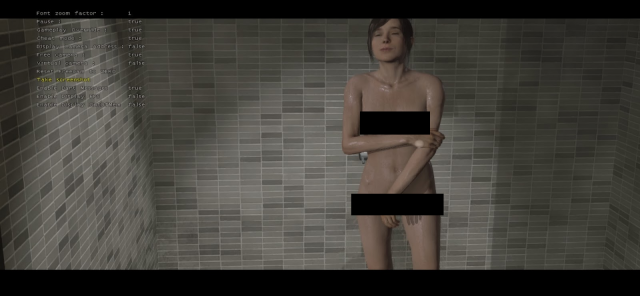
Ars Technica: When nude images of Jodie Holmes, actress Ellen Page's character from Beyond: Two Souls, began appearing on the Internet a few weeks ago (courtesy of a repositioned shower-scene camera running on debug hardware) we thought the story was a little too tabloidy to cover. This kind of embarrassing, tawdry celebrity gossip is pretty common in the entertainment industry, even if it's relatively rare in video games particularly. Scandals revolving around supposedly inaccessible adult content in games aren't completely unheard of, though; remember GTA: San Andreas' Hot Coffee?
PBS Revisits the Panic Broadcast
c2meworld.com: “We know now that in the early years of the 20th century, this world was being watched closely by intelligences greater than our man’s, yet as mortal as his own.” Those words opened the greatest fictional radio broadcast of all time, which aired 75 years ago this month and has been a source of fascination ever since, particularly among those who cherish our medium. “War of the Worlds,” the 1938 broadcast on CBS Radio by Orson Welles and the Mercury Theatre on the Air, is the subject of a video documentarythat premieres Tuesday Oct. 29 on the outstanding PBS history program “American Experience.” I recommend it highly.

Casting Aladdin: Where are all the Middle Eastern Actors?
Arts in Color: I have been very lucky to have been working consistently in theater for the past 5 years. I have faced many struggles as an actor of Middle Eastern descent but I am happy to say that I have found a way to make it work. I am not normally the kind of person who makes a stink about things, but something has recently happened in the Broadway community, and I feel so strongly that something has to be done. Unfortunately, I haven’t posted any of my thoughts about it, because I am trying to protect my own career. I fear that if I do speak up, I will be blacklisted by the producers, casting director, etc. I also don’t feel like I have a big community of minority actors that would have my back if I did raise awareness about this issue.

Drag performers of decades past reunite for one last ball.
Theater Reviews + Features | Pittsburgh City Paper: Thanks to vehicles like RuPaul's Drag Race, drag has gotten pretty mainstream. But it wasn't always so. And audiences can witness living proof of Pittsburgh's rich, if largely hidden, drag heritage, especially its African-American incarnation, on Oct. 26. That's when "One More Time, An Old-School (Drag) Ball" reunites — perhaps for the last time — retired performers whose careers date back up to a half-century.

Why Women Collaborate, Men Work Alone, And Everybody's Angry
Fast Company | Business + Innovation: It's a study of rare quality that can aggravate chauvinists and feminists equally. But the work of Peter J. Kuhn and Marie-Claire Villeval for the National Bureau of Economic Research may be able to do just that. In their new paper, "Are Women More Attracted to Cooperation Than Men?," the economists found that, yes, women are--and it has to do with relative competence, the degree to which you think your ability matches up against that of your colleagues. In short, men tend to overestimate their abilities and downplay those of their coworkers, while women shortchange their skills and defer to their peers.

Subscribe to:
Posts (Atom)