Tuesday, October 06, 2015

Vote for Comment of the Week

Votes in the comments.  Voting closes Friday lunchish.

Student #1 has left a new comment on your post "Is Theater Too Ideologically Exclusive?":

This article really struck home with me. I am an extremely liberal person who came from a very conservative upbringing. Whenever my family, parents, grandparents, aunts or uncles, come to see my shows they're always confused and have a lot of questions after. There's also always a lot of comments such as "of course you're a little more liberal than we are...you're in theatre." And it's hard to invite them to my shows, especially the ones who are going to bring up hard topics to bring up at the dinner table over Thanksgiving because I know the show is going to make them uncomfortable. This is what really bothers me about Broadway. Nobody ever wants to go to New York and see the really and truly great work because they can just go see fun and happy Mama Mia and nobody will have to see anything that makes them uncomfortable. I think that we as artists who strive to understand all humans on this planet and give something that will mean something should aim to make ourselves as uncomfortable as possible as often as possible and if that means doing plays that oppose our own beliefs, that could be alright. I think it's also worth noting that often conservative theater-goers or theatre artists hide their conservative nature while in the theatre world because they know that their opinion will not be popular.
Student #2 has left a new comment on your post "Is Theater Too Ideologically Exclusive?":
This article was difficult for me to read, because I had to re-evaluate my own feelings and positions. Like many theatre people, I tend to lean more liberal (ok, very liberal, but I try and keep an open mind) and I also feel strongly about the diversity of the theatrical experience. Yet, if I saw a show which went against one of my core moral beliefs, I’m not sure I could be objective enough to appreciate it. Sure, right now I could tell you that inciting anger is another way of causing emotional change, and that is a valuable theatrical tool. But I’m not sure that in the moment I could condone the performance. And I don’t know for sure what I would think in that moment because I’ve not really had that experience yet. Sure, there have been a few shows where I’ve disagreed with the way things are portrayed, but I’ve never found myself in extreme moral opposition to what’s happening. I think this trend of morally complicit theatre is also very interesting, because while the majority of those who work in theatre are liberal, those who watch theatre are heavily divided. The majority of theatrical audiences are either other theatre people (typically liberal) or the Broadway stereotype of an old white couple (where there is a higher chance of non-liberal viewpoints). So then the question is, did theatre become liberal because at some point it’s audience wasn’t? Or has it been liberal all along, it’s just that the idea of liberal has changed. It’s a question I can’t answer, since I’m not well versed enough in historical social conventions, but it is an interesting point. This article has really made me evaluate my views, and I actually hope I can see a play where I’m morally offended at some point in my lifetime, if only for the personal experience. 
Student #3 has left a new comment on your post "Is Theater Too Ideologically Exclusive?":
I haven’t ever really thought about theater in a conservative vs. liberal view like this before, but now that I am, as the writer states, I can’t really think of a well- known show that outwardly shows and supports politically conservative viewpoints. However, I can’t help but think that this might just be because theater isn’t necessarily the first place people look to when they are trying to incite political change. Most of the plays I can think of don’t have some kind of end game of convincing the audience to choose one side on some kind of political issue, but rather, are trying to convey a kind of more personal, heartfelt message about how we live our lives and how we relate to one another. While there are definitely plays that are vehemently liberal in their subject matter, I feel like that’s different from promoting a liberally- minded perspective. For example, I wouldn’t say that RENT was trying to convince people of the viability of the New York City bohemian lifestyle, but rather, to appreciate the value of friendships and relationships and to appreciate one another’s differences and see others complexly, an idea which I don’t feel is explicitly on one side of the political spectrum. On the same note, I don’t think that the orgy scene in Pippin promotes promiscuity. but, rather, is used as a plot point to show Pippin’s ascent into adulthood. Also, I feel like this article could be misleading in that it makes it seem that nothing is problematic in theatrical productions. Of course, there are definitely still plays being produced and written which, for one example, don’t feature women or people of color in a good light; should this be okay if the end game of the show is considered to be liberal? And to be honest, I’m okay with theater being, for the most part, a liberally minded and accepting place, because it’s an art form that is so inherently vulnerable and personal. If extreme conservatives complain that they feel as if they don’t have their place in theater, there are plenty of other places they could go to that would be more “accepting” of their perspectives.
Student #4 has left a new comment on your post "Is Theater Too Ideologically Exclusive?":
This is something that I’ve thought a lot about, not necessarily as a perspective practitioner of theatre, but just as someone in society. At what point are we actually open to values other than our own, not just dismissing them as the thought of another person. When do we actually watch something that we strongly disagree with and break down why we disagree with it? And what impact do we have by being creative forces in the world?

I don’t know if there are any universal answers to these questions, in fact I believe there likely aren’t any, but that doesn’t mean an attempt isn’t worth while. In fact, the pursuit of these answers is a motivating force in my life, as I believe it is in many artists’ lives. To me, just the process of trying to keep an open mind, to try and view things in a different light, that is enough to justify holding an opinion and advocating for it. I’ve found that if you actively try to prove yourself wrong, than the only two paths that can play out are that you reinforce your values, or you drop values that were flawed. Because of this, I try and surround my self with a diverse group of people, with diverse opinions, and I have conversations.

I guess all art is is an attempt at a larger conversation. Yeah, it is true that the majority of the people who attend/create theatre are likely to have some biased to liberal values, but that doesn’t mean that their contribution to the conversation is invalid. If anything, it validates their contribution through the fact that they hold beliefs that are different than others, which means that someone who disagrees with their beliefs can state why, creating a new conversation.
Student #5 has left a new comment on your post "Is Theater Too Ideologically Exclusive?":
Although I always knew theater was heavily skewed towards the liberal side of politics I never knew how far that extent went. To find out there are virtual no conservative playwrights writing today is crazy to me . As someone who was raised by fairly conservative parents, my politics have often fallen on the slightly more conservative end of the spectrum, although I agree with many socially liberal ideas. Perhaps I'm similar to the conservatives mentioned at the bottom of the article, ones who are able to understand liberal perspectives well, but don't necessarily embody them. While I'm definitely not as conservative as my parents, and pretty much only agree with them on fiscal issues, I've often felt that I should never get involved in politics while at work in the theater. In fact when I first started pursuing theater I remember my dad explicitly telling me to never talk politics in fear that I'd be boxed out for having a more conservative perspective. While I think that assumption was a bit extreme I can't say I always feel open about sharing my politics even here at school. I personally enjoy the ideologies present in modern theater and think they stimulate important conversations, but I do see a lack of diversity when it comes to more conservative ideas being presented, which is a shortcoming to the community as only half of a conversation is ever often being adequately represented. I personally have no problem existing in a predominantly liberal field, because the liberal focused principles of fairness, and protection from harm are crucial to creating a safe environment for new work to shape and take form, but I'd love to see a more conservative perspective enter theater as well to not only help stimulate an enriching conversation across political philosophies, but also help other more reserved conservatives in the field not feel like they have to hide part of their political agenda as they go to work everyday. 

BONUS HONORABLE MENTION:


Ruth Pace has left a new comment on your post "Papal equipment takedown could take days, Stagehan...":
The pope once came to Philly
The city went rather silly.
With massive reverent crowds
Prayers most loud,
at least the weather wasn't too chilly.
But wait! Local 8 cries,
"We put on quite the show for you guys!"
With stages and equipment abounding,
Our tech's cries are resounding,
work lasts longer than you imply.
For you see, strike will take a bit.
On our asses, we do not sit.
For this task we have multiple crews,
(such good planning surely is not news)
We'll go with the night oil lit.
Now the workers of dear local 8,
they will be working 3-5 days straight.
And when they finish with the city,
All will praise IATSE,
For the wonders they work are great.
So great it was as "seen on TV."
(Said Michael Barnes, not me)
The pope I'm sure, is most glad.
If he weren't, t'would be bad,
Such a wonderful guy, you see.
Now this concludes my epic,
a tale of tech most poetic.
I hope to god that this counts,
if not, a war cry I'll sound,
and the rest of my comments will be linguistically eclectic.

Sunday, October 04, 2015

Worth a Look

Here are a fwe posts from last week's Greenpage that might be worth your time...

Is Theater Too Ideologically Exclusive?

The Clyde Fitch Report: For all the conversations going on in the theater industry about diversity, social change and audience engagement, I’ve noticed recently how infrequent it is that I actually end up having a distinct, contrasting opinion to the foundational arguments of the plays I see and read. This reflection comes in part as a result of starting my own theater company, and being now faced with the inevitable question of whether or not, as artistic director, I possess a moral monopoly over the work we produce. Is it better always to produce work that, at least in some way, reflects my own values, given that I need to be able to fully stand behind all our productions? Or does this restrict the diversity of viewpoints I also want to represent?
 

What Is Sketching in the Digital Age?

ArchDaily: Every good design should start with a sketch. The problem, as everyone knows, is that computers are killing sketching. Or are they?

To begin with, it’s questionable whether there really has been a decline in sketching, given the conviction with which so many architects defend the importance of hand drawing. Even for the most technologically savvy architects, many simply don’t see an alternative to the humble pen and paper.

Spelunking with Shakespeare

HowlRound: The most anyone can hope for is to be wrong about Shakespeare in a new way.—T. S. Eliot

My name is Lue. And when it comes to Shakespeare, I’m afraid I might be just a little bit tone-deaf.

And after working at the Oregon Shakespeare Festival for more than twenty years, I am grateful that there isn’t a competency test because I would not have had the terrific career I have had. But there is much relief in finally confessing my dirty little secret.
 

Stuntwomen in Movies, TV Receive Unequal Pay for Equal Work

Variety: You’ve probably seen the well-regarded — and deplorable — statistics about women’s employment in the entertainment industry from the Geena Davis Institute on Gender in Media, the Annenberg School of Communication and Journalism, and Dr. Martha Lauzen’s Center for the Study of Women in Television and Film. The statistics are discouraging, but I’m glad they exist. Without them we wouldn’t know the true shape of our working reality.

The Sustainable Theatre Practice Treaty

HowlRound: Imagine a place without war. A place where the environment is fully protected. A place that is dedicated to new discovery and scientific research. That near-utopian ideal is present in Antarctica, where the Antarctic Treaty has insured international cooperation and stewardship for decades. Theatre should also serve this purpose. There are a number of ways in which climate change is being addressed through theatre and the arts. But as Antarctica captures the imagination and shows us what can be done in the most extreme conditions, I propose that we adopt an ambitious agreement modeled on that success to aggressively address the urgency of climate change now. Will you be party to the Sustainable Theatre Practice Treaty?

Thursday, October 01, 2015

Vote for Comment of the Week

Put your vote in the comments.  Voting closes Friday lunchtimeish.

Student #1 has left a new comment on your post "How Educational Elitism Is Hurting Theatre": 

It sounds as though the author is trying to posit that no school is actually "better" than any other, and that all theatre students learn the same content no matter where they study. If that is indeed what the author is asserting, then what an absurd notion. Sure, not every highly regarded institution picks up all of the most talented individuals, and not all talented individuals pick the most highly regarded institution. But there's a reason the "best" schools are considered the best. There is an inherent difference that sets them apart. And sure, the circle is pretty much self-confirming. The best schools attract some of the best, most talented students in a field, who will then graduate performing at a high caliber, reaffirming that those schools are in fact the best. But there had to be something that attracted those high performing performers (ha.) in the first place. By and large, though the author had some fair points, this sounds like a case of sour grapes not about the author *not* going to an Ivy theatre school, but about the response the program they graduated from garners.


Student #2 has left a new comment on your post "Back To The Future?": 

This article was very eye opening. No one really thinks about the signals and airwaves they use when you turn on a radio, use wifi or a cell phone. However, so much these days are wireless, and just because their isn't a hard wired cord, doesn't mean it takes up space. Each microphone on an actor during a show takes up a frequency, and if you use wireless controlled head sets that does too. With a down side in the MHz spectrum theatrical companies are going to run into even more problems. Broadway alone will have to make changes to accommodate for this. Sometimes the new technology that comes out and rules the world, hurts a lot of other things in different ways that was not intended. I remember a technical theater teacher of mine telling me about when the cell phone companies took over more of the airwaves which resulted in issues for the masses trying to use them too, like Broadway in Manhattan. This is very interesting to see where this goes. 


Student #3 has left a new comment on your post "Is Hamlet fat? The evidence in Shakespeare for a c...": 

While reading this article, I imagined its author (Isaac Butler) laughing at his intended audience response, which was to be up in arms about someone suggesting that Hamlet be something other than lean, gaunt, and pretty. I reject that our culture is so heavy on skinny heroes that we couldn't come to terms with a fat Hamlet. I will believe that we live in society where this is possible, and not far away from being scorned by the bulk of us. I do want to respond to one of the last things that he said about the necessity for counter-tradition in order to change our perceptions. This is inherently wrong. You do not beat one tradition by forcing its opposite to begin to happen. This would create a duality of people who agree with a certain side, and will do nothing but argue its pointless reasons for needing to exist. Within the scope of Hamlet's body type, is mattes slightly less. However,when that logic is displaced into our society with other groups and mindsets that are oppressed, it becomes very dangerous. To force a new way of thinking into the images and media consumed by the masses of people simply sends them into retreat and makes the people making the traditional versions all the more powerful and successful. The alternative is to integrate. Invite them into the conversation by talking casually about something, without an intrusive attack into the way you think they see it. Then, once the door is opened, they will ask questions, and you will answer those questions well. This is the way of idealistic change. In the case of fat Hamlet, casting directors should be conscious of our pre-conceived notions and just start to do it (while casting for best acting first, such that there does not become a standard of body type being more important than talent in any case), which will lead people to start to accept Hamlet as a potentially fat character. In the case of other social movements, educated people need to be aware of the fight or flight mentality of less-educated people, and carefully choose the way they wish to engage them on issues that they want to educated them about. 


Student #4 has left a new comment on your post "SAG-AFTRA Video Game Voice Actors Strike: Actors T...": 

I was listening to a story on NPR a couple weeks back that grazed this topic ever so briefly yet very poignantly. Sir Ian McKellen was being interviewed by Terry Gross about general life things and there was a long back and forth about his work on the Lord of the Rings series. Terry brought up the gaming industry and McKellen’s voice work for the videogames associated with the LOTR movie. After a few short exchanges, McKellen mentioned that it behooved the actors from the movies to sign contracts for the gaming voiceovers. If they didn’t do the voice work in the games, someone would be found to mimic their voice and do their mimicked voices in the games. He seemed to be both appalled and accepting of that being the way in which the gaming/movie crossover industry works. Just from that small snippet, I gathered that the voiceover work in the gaming industry is like the Wild West. Few rules and protections for those doing the work, and all the leeway one could desire for those producing at the top. I am more than happy to see that there individual’s fighting for their rights and protections in the gaming industry! More power to them! 


Student #5 has left a new comment on your post "Monkey Business: PETA Sues On Behalf Of The Monkey...": 

I had not heard of this debate prior to reading this article, and I think I was living in a slightly better world five minutes ago. This is such a stupid thing, and I cannot believe it's being considered as an actual issue that can and should be taken to court. The picture was taken by an animal, which means it is in the public domain. Who is being harmed by the monkey's picture being used? Is the monkey's work being stolen? Is he upset about it? Maybe the monkey is thrilled that his photography is getting so much attention worldwide. PETA doesn't know.

Monday, September 28, 2015

Worth a Look

Here are some posts from last week's Greenpage that might be worth your time...

Business Lessons From ‘The Wrecking Crew’ Documentary

Pro Sound Web: “Obscurity is the realm of error.” — Attributed to Luc De Clapiers.

The Wrecking Crew is a documentary about an elite collection of musicians. These troubadours were studio musicians who helped add to the sound of rock n’ roll from the mid 1950s to the present day.

Despite their incredible influence, their names and body of work were known only by a small set of music industry insiders. Their names do not appear on any albums nor do they have a hallowed space in the Rock and Roll Hall of Fame.

SAG-AFTRA Video Game Voice Actors Strike: Actors Taking Strike Vote

Variety: Negotiators for SAG-AFTRA are seeking a strike authorization from video game voice actors after failed negotiations for a successor deal.

The performers union sent out postcards for the strike vote on Sept. 16 to “affected members” — meaning those who have worked on the Interactive Media Agreement — with a deadline of Oct. 5. The SAG-AFTRA constitution mandates that a strike authorization goes into effect only if backed by at least 75% of those voting.

“After a successful strike authorization vote, we will reach out to the employers and ask them to return to negotiations,” the union said.

The Tangled History And Mysterious Legality Of "Happy Birthday"

Fast Company | Business + Innovation: The headlines on Tuesday and Wednesday blared, "Happy Birthday found to be in the public domain." Unfortunately and confusingly, they were incorrect. A judge's ruling in a suit filed two years against the ostensible current rights holders for the lyrics to that song, Warner-Chappell Music, didn't decide that. Instead, the judge found that Warner-Chappell lacked valid rights to the lyrics, whether or not they remained under copyright protection, even as it collected fees to the tune of $2 million a year.

A New Website Tells You Where To Buy and Sell Salvaged Wood

Architect Magazine | Products, Technology, Wood, Engineered Wood: Lumber and engineered wood is everywhere on the jobsite—both when a building is going up, and when it’s coming down. In a 2008 report, the U.S. Department of Agriculture cited a 1998 figure by the Environmental Protection Agency that the equivalent of roughly 250,000 single-family homes were being demolished annually in the U.S., resulting in more than one billion board feet of usable, structural lumber that could be reclaimed from those projects.

Monkey Business: PETA Sues On Behalf Of The Monkey Selfie; Claims Copyright Belongs To The Monkey

Techdirt: Remember the monkey selfie? That is the photo that was taken by a macaque monkey in Indonesia, using a camera left on the ground by photographer David Slater. It first became a story back in 2011 when the photographs of the monkey became a bit of an amusing filler piece for some newspapers.

Wednesday, September 23, 2015

Worth a Look

Here are some posts from last week's Greenpage that might be worth your time...


Spring Awakening's Deaf Actors Dance to Music They Can't Hear

Theatre Development Fund – TDF: It's a moment that would be complicated in any musical: In the current Broadway revival of Spring Awakening, at the start of a song in the second act, a group of actors faces upstage, backs to the audience. They represent a forest of trees, and eventually they begin to sway in unison as the show transitions into a searing number about loss. For their choreography to have its intended impact, everyone needs to move at the same time, as though the woods have suddenly sprung to life.


Why Pianos Can't Be Perfectly Tuned

io9.com: Technically speaking, pianos tuned to coventional 12-tone equal temperament aren’t actually in perfect tune. A new video from MinutePhysics explains the math behind this musical oddity, and why in the case of pianos, close enough is good enough.


Students Claim Provocative Art Project Is a ‘Hate Crime, an Act of Terrorism’

Hit & Run : Reason.com: Students at the University at Buffalo were outraged about the sudden appearance of “White Only” and “Black Only” signs above certain bathroom doors in the College of Arts and Sciences building. But outrage was largely the point, since the signs were part of a black student’s visual arts project.


Theatre in a Fly-over State: The Racial Divide

HowlRound: The Slant Culture Theatre Festival (now defunct) is a Louisville festival whose third year coincided with my decision to be an arts writer in Louisville. I reviewed several of the festival’s plays and saw all but one of the sixteen productions. I had a great time watching and celebrating the Louisville theatre scene come together.


Company One Has A Social Network All Its Own

ARTery: Social events are de rigueur for arts organizations today as the search for new audiences becomes a matter of survival. These days, everyone’s doing under-35 nights, date nights and all kinds of other experiments aimed at broadening the base.

At Company One Theatre, these social events are built into the mission.


Saturday, September 19, 2015

Worth a Look

Here are a few posts from last week's Greenpage that might be worth your time...

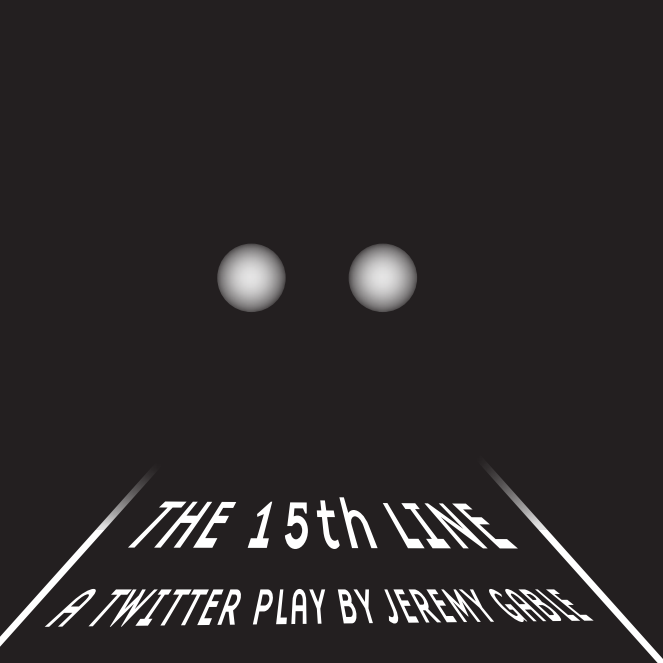
Twitter Plays: When Theatre Connects with Reality

HowlRound: During my first year in Philadelphia, I was working from home. While some might consider this an enviable task, I had no connections, and no resources to test out my playwriting. I had left behind a theatre in California—a small, dirty space that served as an essential theatrical training in my impressionable younger years. Suddenly, I found myself approaching thirty with little to do. So I did what a stranger in a strange land would naturally do: I spent a lot of time on social media. And during this time, I found myself particularly drawn to Twitter.


Kimberly Peirce's Remake of Carrie Struggled With Vagina-Phobic Execs Who Couldn't Say "Vagina"

io9.com: When Boys Don’t Cry director Kimberly Peirce remade Carrie in 2013, everyone dismissed her version of the film as an unnecessary do-over. But Peirce had some ideas for how to make her version stand apart—including an awesomely weird ending, which freaked out studio executives who couldn’t even say the word “vagina.”


“Too Street”: Hypocrisy in Policing the Speech of our Actors

Bitter Gertrude: I just had an interesting conversation with someone whose white teens are using the slang words “finna,” “aight,” “brah,” etc. She characterized it as “shortening words to sound hip.” I’m almost certain she just didn’t know where the terms came from; I don’t think she was trying to be erasive. But it brought to mind how poorly we’re handling political issues around language, especially in the theatre.


Fair Wages? Are Actor Unions Fairly Serving All Actors?

OnStage: There's been an alarming shift towards lower actor wages within the unions. And too many members of AEA and SAG have been complacent in letting their union reps negotiate less compensation in return for a producer's promise of expanded employment opportunities.


The Best Tools and Toolbox

The Sweethome: After more than 300 hours of research and testing of more than 180 tools, we’ve put together the best tool kit for your home (and found the best toolbox to hold them all). To come up with these 22 recommendations, we consulted three carpenters with a combined experience of 36 years, got input from six leading tool experts, and had many, many conversations with tool manufacturers.