Sunday, October 20, 2019

Worth A Look

Here are a few posts from last week's Greenpage that might be worth your time...

Barcelona Dance Company Speaks Out On Being Barred From Performing At The Los Angeles Theatre Center By Immigration Officers

www.broadwayworld.com: A year ago, José Luis Valenzuela put his plans in motion to bring the award-winning performance artist, Marta Carrasco and her acclaimed political dance-theatre production Perra de Nadie (Nobody's Bitch) to Los Angeles. The trip, Carrasco's third as an artist produced by Valenzuela, was meant to be her farewell performance.


Behind the Scenes begins development of a Mental Health and Suicide Prevention initiative

Protocol: BEHIND THE SCENES was created so industry members could look after each other in times of crisis. The charity originally defined crisis as entertainment technology professionals, or their immediate dependent family members, who are seriously ill or injured.

In 2016, Behind the Scenes was approached by a concerned individual, Karen Sherman, who was seeing too many of her colleagues dealing with depression and substance misuse. She wanted to find a way to encourage individuals to seek counseling at the start of problems, before they became a crisis and, in an expansion of its mission, the BTS Counseling Fund was created to help ease the financial burdens associated with seeking treatment.


Shakesqueer - A Queer, Feminist Reading

At This Stage: For hundreds of years Shakespeare’s plays have dominated the theater industry. Scholars, conspiracy theorists, and flat out fanatics have speculated on the playwrights identity for quite some time now. But was Shakespeare really queer? And does it even matter? It is nearly impossible to say for sure. Given how little historians have been able to document on the life of William Shakespeare, we are not even sure of his exact date of birth. But what we have for sure are countless dirty jokes, a fury of queer desire, and gender-fluid romance strung between 37 plays and 154 sonnets, half of which are explicitly addressed to men (Arden Shakespeare Complete Works). It’s all things lude, crude, and lascivious. This article will provide a queer reading of Shakespeare’s most popular plays and fan favorite characters. Who is the gayest in the canon? And what does this say about the man himself?


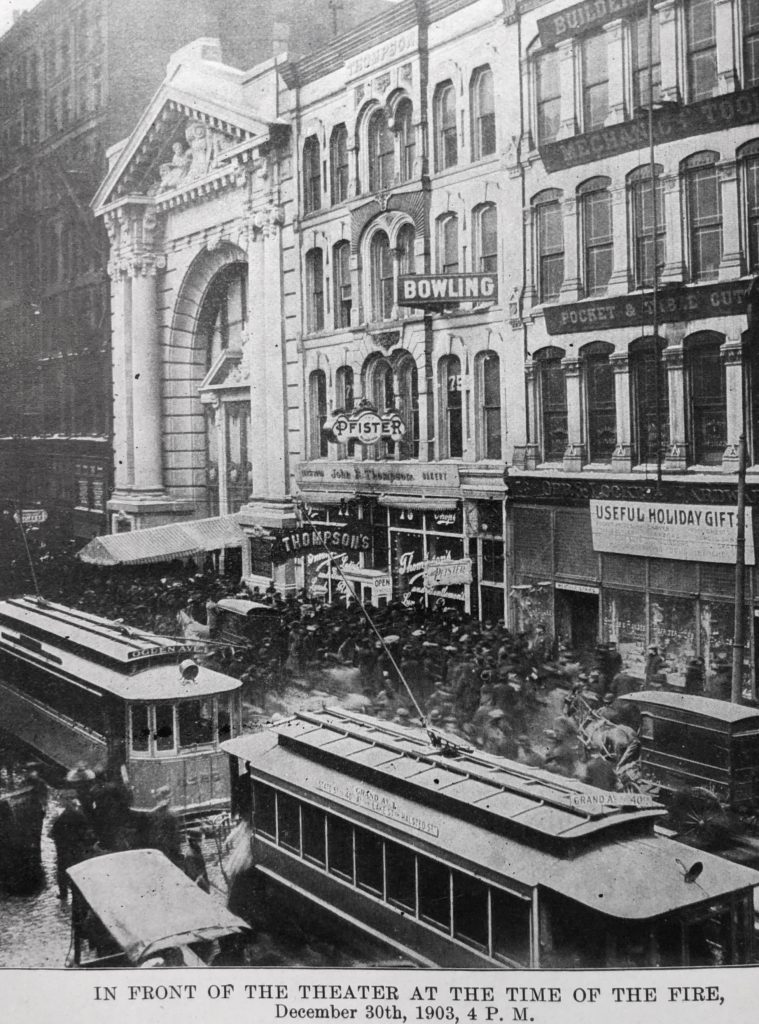
Tales from a Scenic Artist and Scholar. Part 820 – Fire, 1912

Drypigment.net: From 1905 until Al Ringling’s passing in in 1916, Thomas G. Moses completed several designs for the Ringling Bros. grand circus spectacles. In 1912, Thomas G. Moses wrote, “Went to Sterling to catch Ringling to collect $1,200.00. As I went to the tent to find Al Ringling, I discovered everyone watching a fire – a stable at least four blocks away. A spark was blown towards the tent, the top of which is prepared with paraffin to make it waterproof. It soon ignited from the sparks and in less than thirty minutes the big tent was destroyed.

Solving the "Lulu" Problem

The Theatre Times: Frank Wedekind’s Lulu is the archetypal modern classic about a sexy woman. Precisely for that reason, it’s a very tough nut to crack today, no less for adaptors than for directors of the original texts.

Wedekind’s first version, a 5-act “monster tragedy” written in 1894—about a sensuous young woman exploited, objectified and loved by a series of husbands and other men before being murdered by Jack the Ripper—couldn’t get past the German censor. So Wedekind fiddled with it for years, eventually expanding it into two plays (Earth Spirit and Pandora’s Box) that amplified the story’s lurid details and added background information that, in a teasingly neutral way, provided social commentary.

Sunday, October 13, 2019

Worth a Look

Here are a few posts from last week's Greenpage that might be worth your time...

Old Vic's Gender Neutral Toilets: A Dialogue

Exeunt Magazine: We are spilling out of the Northern line on our way to rehearsals when The Stage publishes Sarah Ditum’s article criticizing the Old Vic’s decision to implement gender neutral toilets. Rehearsals for a play in which we hire cis body doubles to take over our lives as trans people, to see if we ever get to author our own stories.


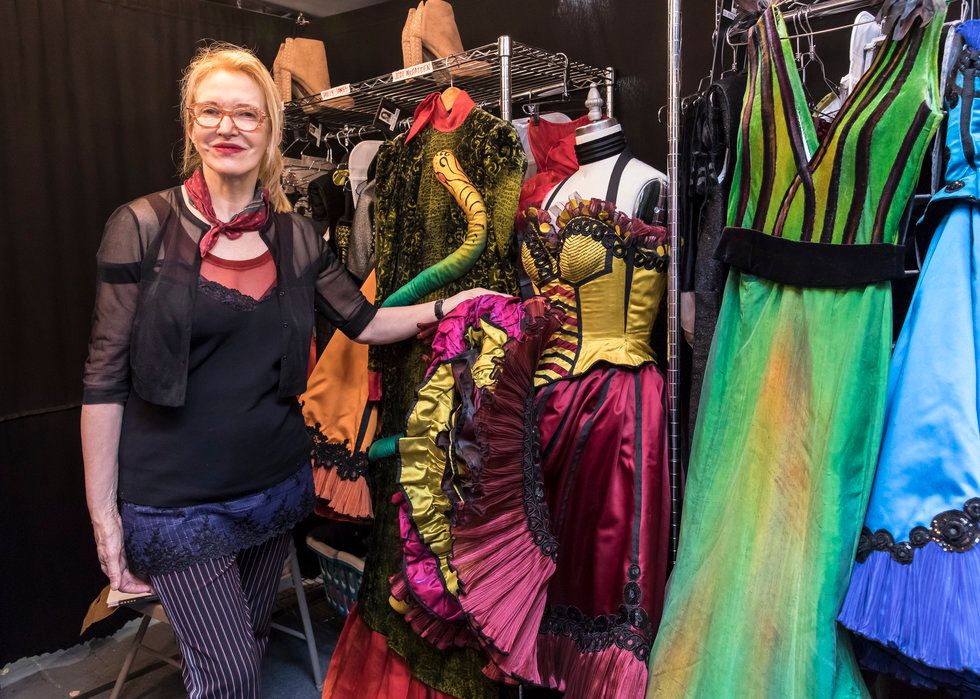
Inside the Living, Breathing World of the Washington National Opera's Costume Design

On Tap Magazine: “They think of the costumes as living, breathing things. They develop intense relationships with the costumes themselves as they’re literally forming them with their hands.”

Timothy O’Leary is describing the love story between the Washington National Opera (WNO)’s costume team and the works of art they fit to singers not like a glove, but like a second layer of skin, an extension of their very being. And it’s an easy romance to get swept up in.


Geena Davis Unveils Partnership With Disney to "Spellcheck" Scripts for Gender Bias

Hollywood Reporter: During a closing keynote speech at the New Zealand Power of Inclusion Summit, the actress explained how a new digital tool will prevent film and television works from perpetuating underrepresentation and stereotypes — and their pernicious real-world effects.


We need to talk about money…

ProSoundNetwork.com: Us freelancers are all entrepreneurs—whether we like it or not—so let’s embrace that and not be afraid of more business-focused dialogue. We can also be more honest about downtime (we all get it) and what constructive activities can be used to fill that time.

So, I’m going to get the ball rolling by discussing some things that I have found useful in negotiating more than a decade of freelancing.


The Second-Order Problem: A Participant-Centered Approach to Immersive Design

noproscenium.com: In proscenium theatre, an invisible, imaginary wall separates the performers from the audience: the fourth wall. In an immersive experience, this fourth wall is pierced or broken (or perhaps does not even exist in the first place).

But why do we break down the fourth wall? What is the rationale for doing so?

Sunday, October 06, 2019

Worth a Look

Here are a few posts from last week's Greenpage that might be worth your time...

Intiman's Board Clashes with Staff, Leaving the Theater's Future in the Air

Slog - The Stranger: Senior members of Intiman's board are in crisis mode. They're saying the theater is out of cash and needs to drastically reduce staff by the end of the month or else close soon in order to gracefully exit the scene. The staff is saying the theater is not in crisis mode. In fact, they've got a plan that would solve the immediate financial need and start the new year with a surplus. They just need the board to approve that plan. But the board isn't buying the plan and won't budge. Now nobody knows what will happen to the embattled, nearly 50-year-old institution, which this year finally dug itself out from under $2.7 million in debt and earned an arts award from the Mayor.


Peek Inside Three Major Costume Shops of Ballet, Broadway and Ballroom

Dance Magazine: In much the same way that choreography and performance create a storyline, costumes can transport an audience into a certain mood or time period with fabrics alone. Three costume departments gave us an inside look at how they prep for ballets, Broadway shows and performances on the road.


How Object Puppetry Confronts Climate Change

HowlRound Theatre Commons: I’m the artistic director of Glass Half Full Theatre in Austin, Texas. Our company creates new works of theatre using the precise physical language of both humans and puppets—through clowning and object puppetry, in which existing objects are manipulated as characters—to confront global issues of environmental and social justice and explore imaginative solutions. In 2018, we presented an original stage production called Polly Mermaid, Apocalypse Wow!, based on a “walk about” persona that Indigo Rael, a company member, had created. Polly, whose purpose is to help people rethink their interactions with “disposable” plastic, has been an in-demand persona at live events such as Earth Day ATX and the San Marcos Mermaid Festival, and even has a short film detailing her origin story.


Montgomery is 60% black, but local theater doesn't reflect this. ASF is changing that.

www.montgomeryadvertiser.com: When the Alabama Shakespeare Festival board asked Rick Dildine to join as artistic director in 2017 he researched every playwright the festival had hired in the past 45 years.

He was the director of a festival in St. Louis then, where he garnered praise for taking Shakespeare out of the theater and onto the city’s public streets; casting neighborhood residents alongside professional actors.

In Dildine’s words, a theater’s programming “is its destiny.” To him, theater is local. It builds community. And the stories projected from its stage matter.


Online Survey, from Behind the Scenes, to Help Develop a Mental Health and Suicide Prevention Initiative

Stage Directions: Behind the Scenes, in response to concerns about the rising number of suicides and the prevalence of alcohol/substance misuse within the entertainment industry, is beginning work on a Mental Health and Suicide Prevention initiative and wants to get a sense of how many people in the industry are experiencing anxiety, depression, thoughts of suicide, problems with alcohol/substance misuse, or reactions to traumatic events.

Sunday, September 29, 2019

Worth a Look

Here are some posts from last week's Greenpage that might be worth your time...

Those Who Reject Play: Immersive Design for Everyone Else

noproscenium.com: As an adult, do you still like to play? Use your imagination? Around others?

Since you’re reading No Proscenium, chances are good your answers are emphatically yes, yes, and… sometimes. But beyond our bubble of immersive design enthusiasts, if we reach out to the billions of people who haven’t even heard of “immersive” entertainment, how many of the masses would answer the same way?


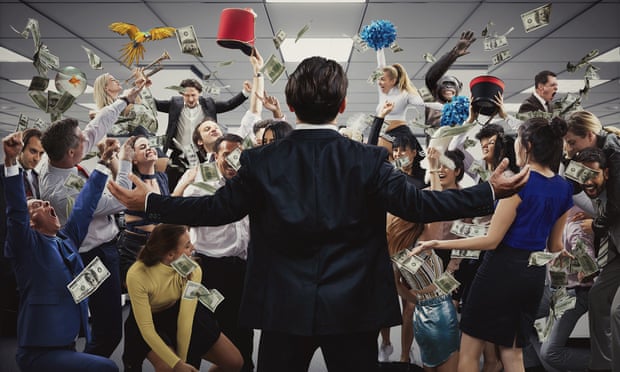
Immersive Wolf of Wall Street actors get personal alarm buttons

Stage | The Guardian: The company behind The Wolf of Wall Street, the latest production to tap into the trend for immersive theatre, has introduced safeguarding measures to protect actors and participants following a series of incidents at previous high-profile shows.


ICYMI: Intimacy Direction in LA Theatre

At This Stage: On Saturday, September 21, 2019 from 11 am to 1 pm at the Los Angeles Theatre Center, LA STAGE Alliance hosted an Intimacy Direction Panel. Moderated by LA STAGE Alliance Programs Manager, Michaela Bulkley, with panelists Allison Bibicoff, Rachel Flesher, and Ann James (click here to read more about them!), we discussed the positive impact an Intimacy Director can have on a production and the rehearsal process.


Led Zeppelin ‘Stairway to Heaven’ Trial Resumes Today

Variety: The legal rollercoaster of the “Stairway to Heaven” case — which pits Jimmy Page and Robert Plant, writers of the Led Zeppelin anthem, against the publishers of the earlier song “Taurus” by Spirit — resumes in a San Francisco 9th U.S. Circuit Court of Appeals on Monday morning.


Institute on Disabilities Partners with Peoples Light and The National Theatre to Present Revolutionary Smart Caption Glasses

Stage Directions: The Institute on Disabilities at Temple University, College of Education, is collaborating with People's Light theater in Chester County, PA, and the National Theatre of Great Britain, on a project that will revolutionize arts accessibility for the deaf and hearing loss communities. Smart Caption Glasses allow people who are Deaf or experience hearing loss to view captions at any performance, from any seat in the theater, using Open Access Smart Capture technology developed by the National Theatre and Professor Andrew Lambourne.

Monday, September 23, 2019

Worth a Look

Here are a few posts from last weeks Greenpage that might be worth your time...

The creative industries are hurting, not helping artists—we need a new model

Prospect Magazine: Every time you watch a television advert, go to a museum, play a computer game, or swipe right on a potential suitor, you’re indulging in the outputs of the so-called “creative industries.” Unless you can remember the time when a “smart” phone was one that simply had a snazzy cover, you would have grown up during the birth of the creative industries.


Abuse Is Not Art: The Yard, CCPA, and Academic Atrocities

rescripted.org: Just yesterday the news broke that Senn High School teacher and former co-Artistic Director of The Yard, Joel Ewing was charged with a count of sexual assault involving a minor.

Earlier this year The Chicago College of Performing Arts at Roosevelt University’s Associate Dean and Director of the Theatre Conservatory Sean Kelley was accused of repeatedly humiliating and sexually harassing his students.


Why ‘Equity, Diversity, and Inclusion’ Is Obsolete

AMERICAN THEATRE: The first time I heard the phrase ED&I, I was sitting in a session at the 2016 Theatre Communications Group National Conference in Washington, D.C. I didn’t know what it meant and was grateful when another attendee asked for the acronym to be defined. “Equity, diversity, and inclusion,” responded the facilitator.


Will Immersive Entertainment Experiences Ever Overtake Real Physical Involvement in the Game?

HERO Sports: After years of unfulfilled promise from developers, it finally appears as though immersive technology is slowly but surely breaking into the mainstream. The entertainment industry - including sports broadcasting - is proving to be a particularly fruitful playground for virtual reality and augmented reality technology; firms such as Ticketmaster are now able to show customers the view from their seat before they purchase their ticket, while others are opting to stream full music gigs in augmented reality via a number of headsets. Although the technology is undoubtedly impressive, will we ever get to the point where it becomes more popular than being physically present at the game?


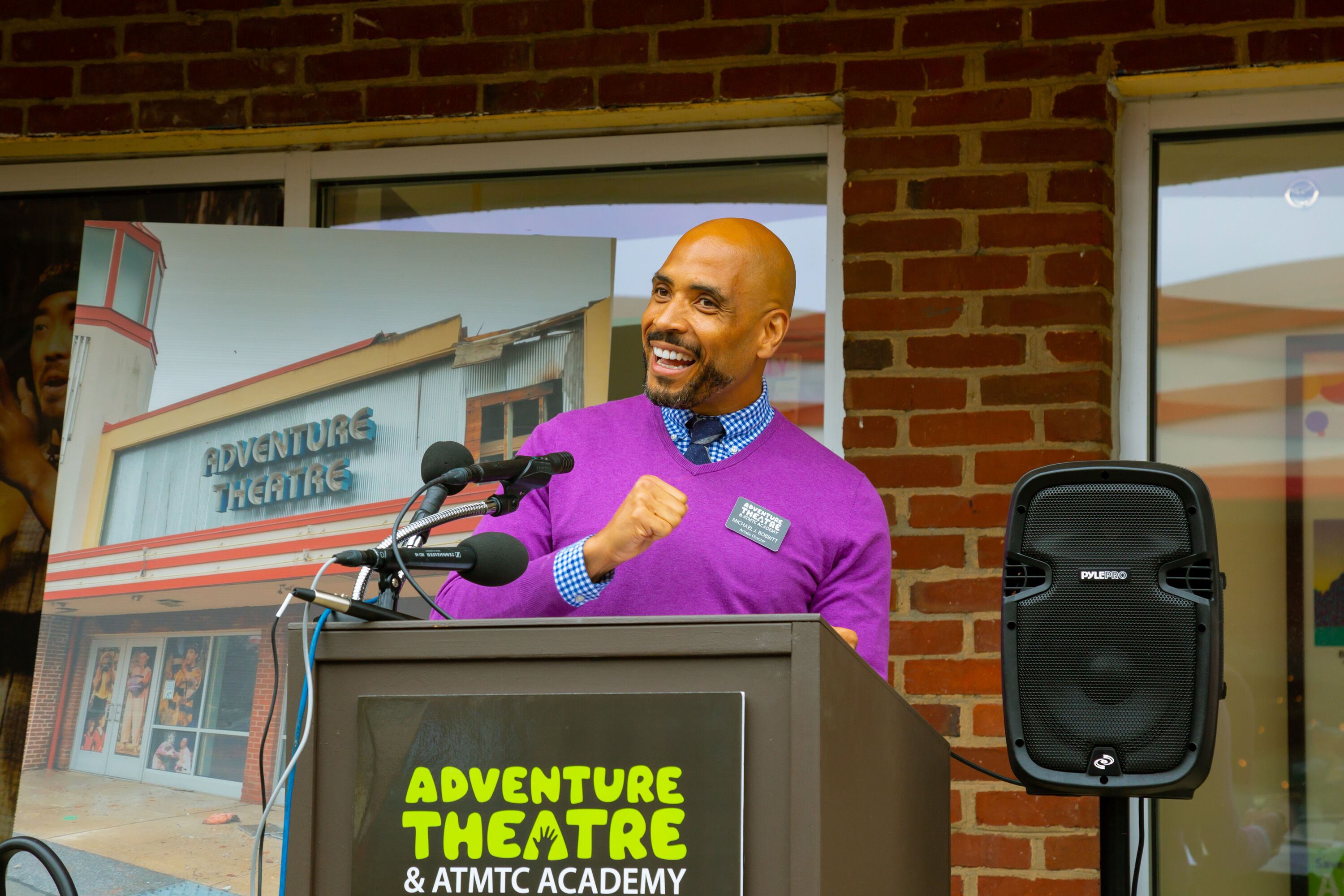
"I’m Not Interested in More Allies. I Need Advocates." A conversation with Michael J. Bobbitt and Raymond O. Caldwell

DC Theatre Scene: What is it like for leaders of Color to work in White theatres? This Howlround Theatre Commons interview is between two well-known Washington area leaders: Michael J. Bobbitt, former Artistic Director of Adventure Theatre MTC, now Artistic Director of New Repertory Theatre in Boston, and director Raymond O. Caldwell, Artistic Director of Theater Alliance.

Monday, September 16, 2019

Worth a Look

Here are a few posts from last week's Greenpage that might be worth your time...

Fine Line Between Collaboration And Exploitation

Butts In the Seats: There was an interesting article in The Atlantic this past July about how the Navy was working on crewing ships with a few generalists who would handle many jobs rather than many experts focusing on a narrower range of functions.

At first, when they were talking about everyone being cross-trained to fill a number of different functions, I started thinking it was a good example for a post about eliminating siloed job functions in arts organizations.


Collaboration Crosses Creative Arts Emmys Categories

Variety: With 97 Emmys set to be given out over the two-night Creative Arts ceremony, it can be easy to forget that the silos the Television Academy creates for awards purposes belie the need for crafts departments to collaborate as much as possible to create a successful show.


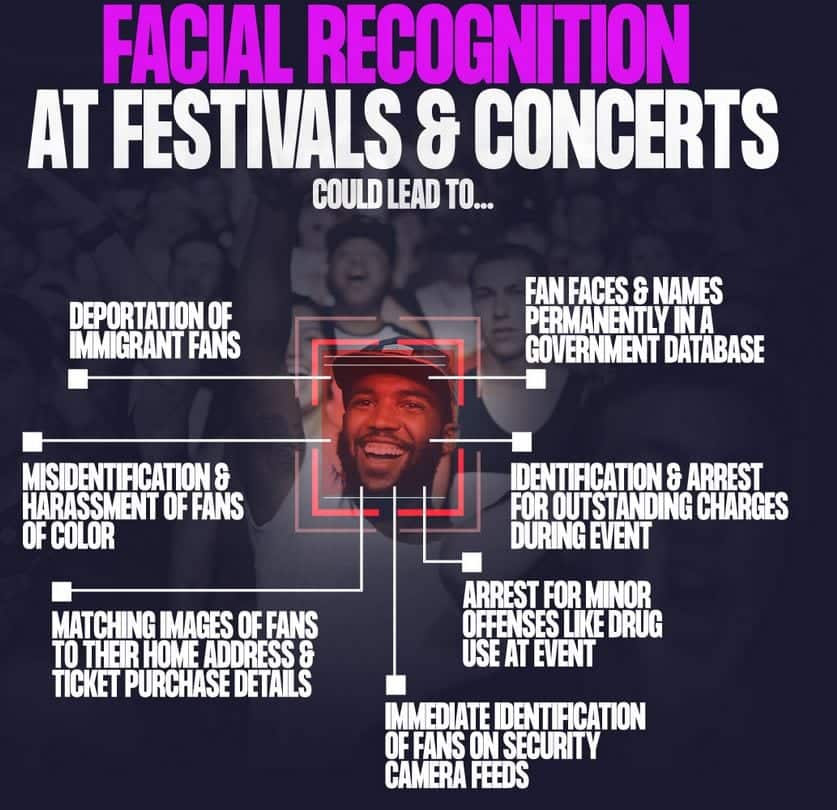
Artists Call on Ticketmaster to Drop Facial Recognition Tech Plans

www.ticketnews.com: Artists including Tom Morello, The Glitch Mob, Speedy Ortiz and Atmosphere are among those who are throwing their support behind a campaign asking that Ticketmaster ban facial recognition software at concerts and other live events.


In ‘Year of Chicago Theatre,’ small Chicagoland companies take major steps to be more inclusive, generous and accessible

www.chicagolandmusicaltheatre.com: In this 2019 Year of Chicago Theatre, small theatres across Chicago are taking major steps to be more inclusive, generous and accessible, reaffirming Chicago’s growing reputation as the epicenter of storefront theatre in the United States. Many small theatres are evolving their company thanks in part to the Chicago-based Gaylord and Dorothy Donnelley Foundation (the Foundation), which supports more than 50 Chicago small theatre companies with annual budgets below $1 million, to help theatres strengthen operations and focus on producing works and furthering initiatives that are relevant to both the artists and their neighborhood audiences.


SNL Has Hired Its First Asian Cast Member

The Mary Sue: First up, in its 45th season, the show is finally adding its first cast member of full Asian descent, Bowen Yang. Yang, who cohosts the podcast Las Culturistas, was a writer on the show last season and he did make it onscreen playing Kim Jong-un opposite Sandra Oh, herself one of only a handful of Asian actors to ever host the show. Yang was hilarious but his appearance shown a spotlight on the lack of diversity in the cast.

Monday, September 09, 2019

Worth a Look

Here are a few articles from last week's Greenpage that might be worth your time...

Theater workers, let's reject 'happy just to be here'

Datebook: In my coverage of Stephen Buescher’s racial discrimination lawsuit against American Conservatory Theater — which has now been settled — one line has stood out to me.

“There’s this feeling of … ‘You know what, you should just be happy that you’re here,’ ”


Women designers make it work onstage

Theater Preview | Chicago Reader: Roughly 15 or so years ago, the Jeff Committee called in a trio of cis-male set/light/sound designers to give members an overview of their work. As the presentation wound down, the men took questions. The question I remember (because as a then-member of the committee, I asked it) was whether women were represented to any significant degree among designers and if not, why not. The answer—a slightly awkward and quite vague "Well, not really . . . because there just aren't"—was as dismal as it was memorable.


Photos from Burning Man 2019 Showcasing the Amazingly Creative Event

mymodernmet.com: With Labor Day now past, another Burning Man has concluded. Black Rock City, the temporary site of the annual event in the northwest Nevada desert, was host to 70,000 participants from August 25 to September 2. Burning Man has a new theme every year, and for 2019 it was Metamorphoses—an idea intended as a “celebration of change and an exploration of uncertainty” and an “embrace of the elusive now.” To express the concept, there was an amazing collection of sculptures and, of course, festival fashion.


Bridging the State of the Art

Theatre Design & Technology - Summer 2019: At the birth of the modern era of high-tech show production in the 1980s, most entertainment technology training was theatre-focused and taught in conservatories.  At that time, this made sense because the world of shows was a lot simpler.


If not now, when?: Falsettogate, and what it teaches us about meaningful minority inclusion

Exeunt Magazine: Falsettos, a 1992 musical by William Finn and James Lapine, is an incredibly Jewish musical. It opens with a song called “Four Jews In A Room Bitching” and takes place in the run up to a Bar mitzvah. It became apparent that none of the creative team or cast in this London revival were Jewish. We were concerned.

Monday, September 02, 2019

Worth a Look

Here are a few posts from last week's Greenpage that might be worth your time...

Big data analysis reveals staggering extent of gender inequality in creative industries

theconversation.com: The term “big data” may bring to mind swaths of private information held by tech companies. But lots of big data is, in fact, visible to all – we just may not think of it as “data”.

If you’ve been to the movies recently, you will have seen a dataset of credits – listing the cast and crew members alongside their roles. While the credits from any one film may not be that useful, the credits from every film can form a big dataset. At Nesta and the PEC (a new policy and evidence centre for the creative industries), we have been exploring how these types of non-confidential big datasets can shine new light on gender representation in the creative industries.


Blow to 10,000-hour rule as study finds practice doesn't always make perfect

Science | The Guardian: With blatant disregard for the public benefits of motivational idioms, researchers have concluded that practice does not, necessarily, make perfect.

A study of violinists found that merely good players practised as much as, if not more than, better players, leaving other factors such as quality of tuition, learning skills and perhaps natural talent to account for the difference.


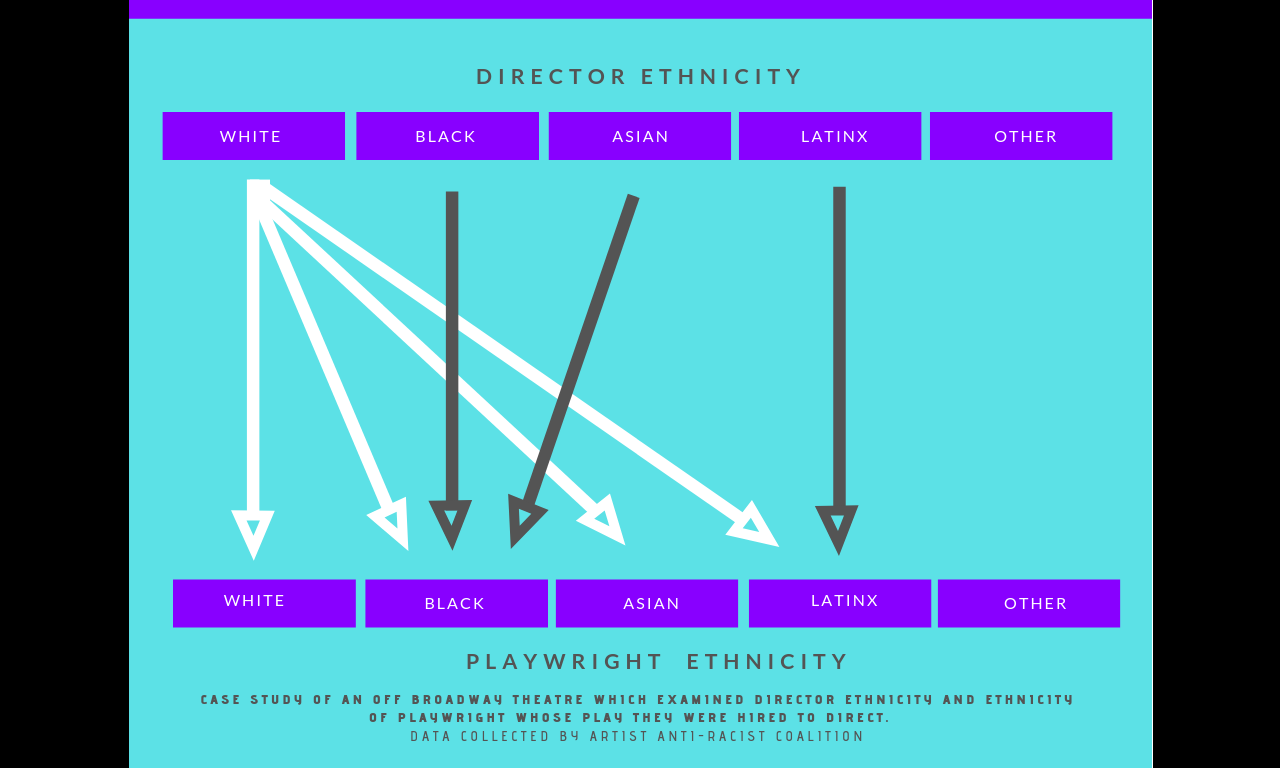
Playwrights of Color, White Directors, and Exposing Racist Policy

HowlRound Theatre Commons: Damn. This thought reverberates through my body, an ultrasonic sound wave carrying much more than disappointment and dismay. As a Black director, actor, and facilitator of anti-racist theatre, I am unable to shake myself free of the viscosity of thoughts I’m having around another company’s decision to uphold a racist policy: hiring a white director to stage a play written by a playwright of color. This has happened time and again: with Lin-Manuel Miranda’s In the Heights, Suzan-Lori Parks’ Father Comes Home From the Wars, James Ijames’s Kill Move Paradise, David Henry Hwang’s Chinglish, Karen Zacarías’ Native Gardens, August Wilson’s Joe Turner’s Come and Gone.


Musical Malaise: The Twilight of the Original Score?

www.clydefitchreport.com: In a disturbing and all-but-hilarious New York Times story from London, it was reported that staff members at several West End musical theaters may now be wearing body cameras. This is to combat an apparent plague of “aggressive, alcohol-fueled theatregoers.” An usher at one of the theaters was quoted as calling the audiences for jukebox musicals the “worst behaved.” London’s “more upmarket productions,” it seems, “are not immune from rowdy behavior.”


Models and Mentors: A History of the Wry Crips Disabled Women’s Theatre Group by Michaela Goldhaber as told by the Company’s Founders

WIT journal: For thirty-four years, Wry Crips Disabled Women’s Theatre Group in Berkeley, California, has been helping women with disabilities find their voices and create performances. In its first twenty years, Wry Crips put together a new performance almost every other year, each one with seven or eight women reading their own writing about their experiences as disabled women. Wry Crips slowed it’s pace in the next decade, but is going strong now with five dedicated members working on Wry Crips Occupy, a historical play about the 504 protest in 1977 when disabled activists took over the federal building in San Francisco.